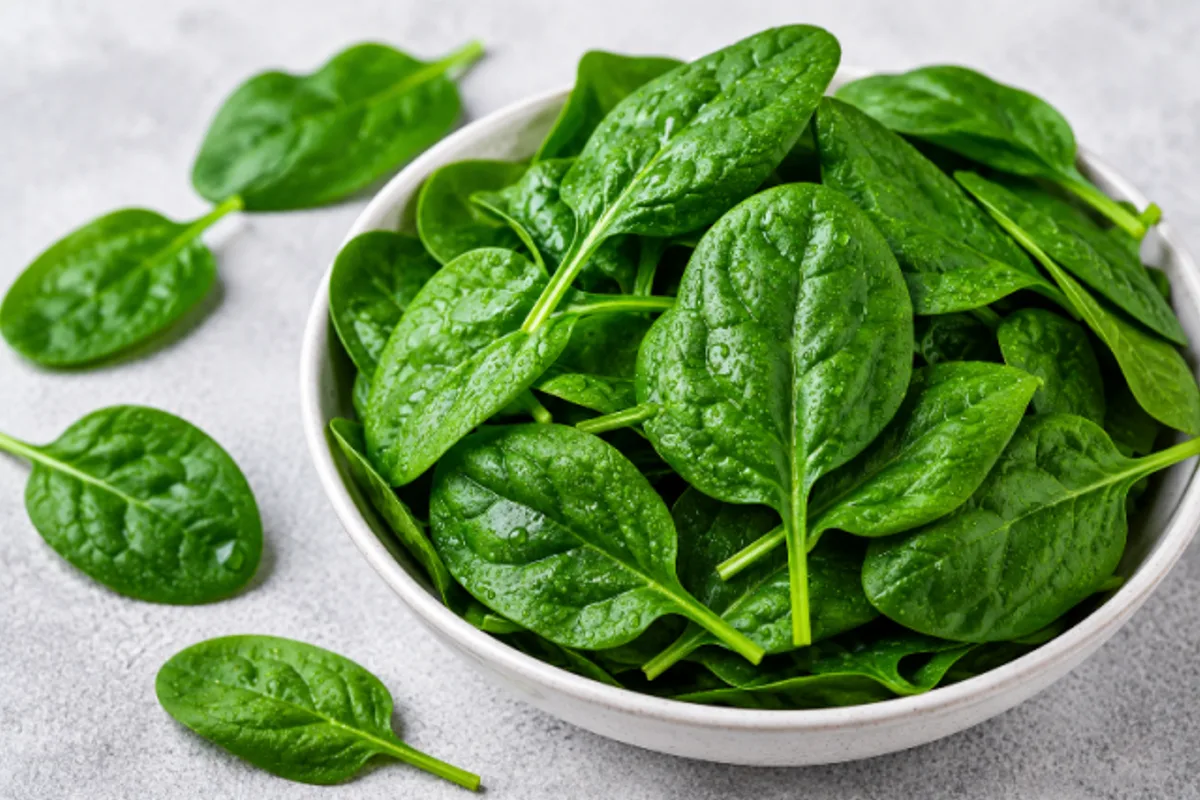
When you eat spinach, your body absorbs vitamins A, C, K, folate, and minerals within a fiber-rich leaf matrix. Iron from spinach is non-heme and absorbs better with vitamin C sources. Oxalates can bind calcium in the gut; cooking reduces oxalates somewhat. Leafy greens support healthy patterns when eaten regularly—not as a single "detox" food.
Key takeaways
The essentials in plain language—useful before the deep dive.
✓
Spinach is nutrient-dense per calorie—especially folate, vitamin K, and carotenoids.
✓
Non-heme iron absorbs modestly; pair with vitamin C for better uptake.
✓
Oxalates are real but rarely a concern at normal portions for most healthy adults.
✓
Raw salads and cooked servings both fit; cooking shrinks volume and reduces oxalates.
Quick answers
Short answers to common questions—details follow below.
Is raw or cooked spinach healthier?
Both fit. Raw spinach is light and salad-friendly; cooking reduces volume and oxalates while concentrating some nutrients per bite. Add fat to either for better carotenoid absorption.
Does spinach give you iron?
Yes, non-heme iron—but absorption is modest. Pair with vitamin C sources (citrus, peppers) and avoid assuming spinach alone fixes iron deficiency.
Can spinach cause kidney stones?
High oxalate load can matter for people prone to calcium-oxalate stones. Most healthy adults eating normal portions are not at risk from spinach alone.
Is spinach safe on blood thinners?
Consistency matters more than avoidance for many warfarin users. Keep leafy green intake steady and talk with your clinician before big diet changes.
What happens if you eat spinach every day?
Most people get vitamin K, folate, carotenoids, and low calories. Those on warfarin need consistent vitamin K intake with clinician guidance.
How much spinach per day is OK?
A few cups raw or one cup cooked is common. Variety across leafy greens is still smart.
What happens over time
A typical timeline after eating Spinach—not a personal medical forecast. Individual responses vary.
●
0–15 minutes
Step 1 Evidence: Strong
First bites
What happens: Chewing ruptures plant cell walls, releasing water, nitrates, and micronutrients. Raw spinach feels light; cooked spinach concentrates nutrients per bite.
Pattern certainty: typical
●
1–3 hours
Step 2 Evidence: Moderate
Digestion & absorption
What happens: Fat-soluble carotenoids absorb better with dietary fat. Non-heme iron uptake varies with vitamin C, phytates, and oxalates present in the meal.
Pattern certainty: variable
●
Several hours
Step 3 Evidence: Moderate
Gut transit
What happens: Fiber adds bulk; some spinach compounds reach the colon where microbes metabolize plant substrates.
Pattern certainty: typical
●
24 hours–1 week
Step 4 Evidence: Strong
Daily pattern
What happens: Regular leafy green servings stack folate, potassium, and carotenoids across the week as part of produce goals.
Pattern certainty: typical
●
Weeks to years
Step 5 Evidence: Strong
Longer-term pattern
What happens: Higher vegetable intake patterns consistently associate with favorable health markers and diet quality—not spinach alone.
Pattern certainty: typical
●
0–15 minutes
Evidence: Strong
First bites
What: Chewing ruptures plant cell walls, releasing water, nitrates, and micronutrients. Raw spinach feels light; cooked spinach concentrates nutrients per bite.
●
1–3 hours
Evidence: Moderate
Digestion & absorption
What: Fat-soluble carotenoids absorb better with dietary fat. Non-heme iron uptake varies with vitamin C, phytates, and oxalates present in the meal.
●
Several hours
Evidence: Moderate
Gut transit
What: Fiber adds bulk; some spinach compounds reach the colon where microbes metabolize plant substrates.
●
24 hours–1 week
Evidence: Strong
Daily pattern
What: Regular leafy green servings stack folate, potassium, and carotenoids across the week as part of produce goals.
●
Weeks to years
Evidence: Strong
Longer-term pattern
What: Higher vegetable intake patterns consistently associate with favorable health markers and diet quality—not spinach alone.
Nutrient snapshot
Serving size: 1 cup raw spinach (~30 g)
At a glance
Calories
7 kcal
Protein
0.9 g
Fat
0.1 g
Carbs
1.1 g
Fiber
0.7 g
Sugar
0.1 g
Vitamin highlights
Vitamin K ~145 mcg 121% DV
Folate ~58 mcg 15% DV
Vitamin A (RAE) ~141 mcg 16% DV
Minerals
Iron ~0.8 mg 4% DV
Magnesium ~24 mg 6% DV
% Daily Value based on a general 2,000-calorie reference diet where shown. Values are approximate.
Source: USDA FoodData Central (approximate values for raw spinach)
Benefits
Potential upsides when this food fits a balanced pattern—not guaranteed outcomes for every person.
Micronutrient density
Evidence: Strong
Spinach delivers folate, vitamin K, and carotenoids with very few calories—useful for filling nutrient gaps in vegetable-forward diets.
Raw in salads, wilted in stir-fries, or blended in smoothies—spinach adapts to many meals, improving adherence to vegetable goals.
Risks & downsides
Balanced context—not scare headlines. Dose, preparation, and personal health history all matter.
Oxalates and kidney stones
Spinach is high in oxalates. People with calcium-oxalate stone history may need portion limits—follow urology guidance.
Vitamin K consistency
Large, inconsistent swings in vitamin K intake can matter for warfarin users—keep portions steady and coordinate with clinicians.
Raw bulk vs cooked concentration
A "cup" of raw spinach is a large volume but modest calories; cooked spinach is easier to over-portion if dressed with heavy fats.
Who should limit this food
Educational context only—not a diagnosis tool. When in doubt, ask a qualified clinician.
!
Warfarin therapy
Maintain consistent vitamin K intake from greens; do not make large sudden changes without clinician guidance.
!
Recurrent calcium-oxalate kidney stones
High-oxalate greens may need limits—follow your urologist's plan.
!
On blood-thinning regimens beyond warfarin
Ask your clinician whether leafy green consistency matters for your specific medication.
How much & how often
A common serving is 1–2 cups raw (or ½ cup cooked) as part of daily vegetables. Most adults benefit from 2–3 cups of vegetables daily from varied sources—spinach is one excellent option, not the only green to eat.
Spinach nutrient composition is well established. Leafy green intake within vegetable-rich dietary patterns has strong observational and guideline support. Iron-bioavailability and oxalate concerns are mechanistically understood and clinically relevant for specific populations—not blanket reasons to avoid spinach for everyone.
Evidence in this article
Food composition data
USDA analyses of vitamins, minerals, and oxalate content.
Guideline syntheses
Vegetable intake recommendations for cardiovascular and general health.
Clinical nutrition
Iron absorption studies with vitamin C co-ingestion and oxalate interactions.
Hierarchy of evidence
1
Systematic reviews & guidelines
Highest synthesis
2
Randomized trials
Strong causal designs
3
Observational studies
Association signals
4
Mechanistic / lab
Hypothesis-generating
Higher on this list generally means stronger confidence for public guidance—but every design has limits.
Research limitations
Non-heme iron trials rarely isolate spinach from mixed meals.
Oxalate risk is population-specific, not universal.
In depth
The short story
Spinach is a low-calorie leafy green with an outsized micronutrient profile—folate, vitamin K, carotenoids, and iron in plant form. Your body digests it like other vegetables: fiber transits, minerals absorb with meal context, and fat helps carotenoid uptake.
Spinach iron reality check
Spinach contains iron, but non-heme iron from plants absorbs less efficiently than iron from animal foods unless you pair it with vitamin C and account for inhibitors like oxalates. Spinach supports iron intake; it is not a standalone fix for deficiency.
Spinach for skin
Spinach for skin posts often highlight vitamin A precursors (carotenoids), vitamin C neighbors on the plate, and “glowing greens.” Eating spinach can support a produce-rich pattern linked with better overall nutrition. That does not mean spinach clears acne, replaces retinoids, or fixes dark circles overnight. Pair cooked or raw spinach with a little fat (avocado, olive oil) so carotenoids absorb better—and keep sunscreen and sleep in the real skin routine.
Spinach for weight loss
Spinach is very low in calories for the volume it adds to omelets, smoothies, and salads. Spinach for weight loss helps when it replaces heavier sides—not when every salad is buried under creamy dressing and fried toppings.
Raw spinach vs cooked spinach
A huge raw salad and a small cooked portion can deliver similar nutrients. Cooking wilts volume and lowers oxalates somewhat. Choose the form you will actually eat consistently.
How much spinach per day?
A few cups raw or about one cup cooked is a solid vegetable serving for many adults. People with kidney-stone history or on warfarin should personalize vitamin K and oxalate intake with a clinician.
Bottom line
Spinach belongs in vegetable-forward eating patterns. Eat it regularly, pair with fat and vitamin C when useful, and personalize portions if you have kidney stone or anticoagulant considerations.
Frequently asked questions
Is raw or cooked spinach healthier?
+
Both fit. Raw spinach is light and salad-friendly; cooking reduces volume and oxalates while concentrating some nutrients per bite. Add fat to either for better carotenoid absorption.
Does spinach give you iron?
+
Yes, non-heme iron—but absorption is modest. Pair with vitamin C sources (citrus, peppers) and avoid assuming spinach alone fixes iron deficiency.
Can spinach cause kidney stones?
+
High oxalate load can matter for people prone to calcium-oxalate stones. Most healthy adults eating normal portions are not at risk from spinach alone.
Is spinach safe on blood thinners?
+
Consistency matters more than avoidance for many warfarin users. Keep leafy green intake steady and talk with your clinician before big diet changes.
What happens if you eat spinach every day?
+
Most people get vitamin K, folate, carotenoids, and low calories. Those on warfarin need consistent vitamin K intake with clinician guidance.
How much spinach per day is OK?
+
A few cups raw or one cup cooked is common. Variety across leafy greens is still smart.
Does cooking spinach destroy nutrients?
+
Some vitamin C drops with heat, but cooking concentrates minerals and reduces volume—and can lower oxalate load somewhat.
References
Sources used in this explainer. External links open in a new tab.

 Evidence: Strong
 Evidence: Strong
 Evidence: Strong
 Evidence: Strong
 Evidence: Strong
 Evidence: Strong