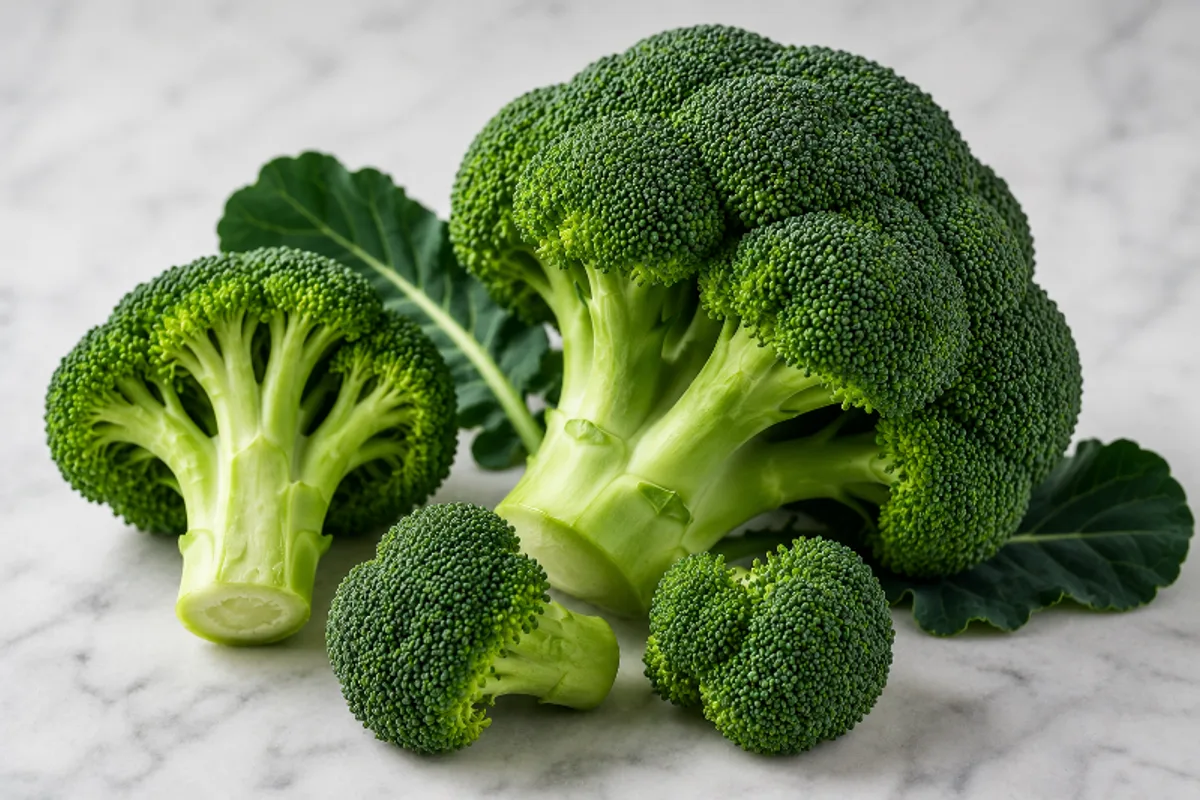
When you eat broccoli, your body digests fiber and glucosinolates that gut microbes help convert into bioactive compounds like sulforaphane (especially from raw or lightly cooked florets). Broccoli delivers vitamin C, folate, and potassium with few calories. Cruciferous vegetables support healthy dietary patterns; they are not a standalone cancer treatment.
Key takeaways
The essentials in plain language—useful before the deep dive.
✓
Broccoli is a cruciferous vegetable rich in vitamin C, fiber, and glucosinolate precursors.
✓
Light cooking can improve digestibility; overcooking may reduce some heat-sensitive compounds.
✓
Gut microbes play a role in converting plant precursors into bioactive metabolites.
✓
Gas or bloating in some people is common with crucifers—portion and cooking method help.
Quick answers
Short answers to common questions—details follow below.
Is broccoli better raw or cooked?
Both work. Light steaming improves digestibility for some while preserving much vitamin C; raw florets maximize certain enzyme-dependent compounds. Eat the form you tolerate and enjoy.
Why does broccoli cause gas?
Fiber and sulfur compounds ferment in the colon, producing gas—a normal response for many people. Smaller portions and thorough cooking can reduce symptoms.
Does broccoli prevent cancer?
Broccoli fits vegetable patterns studied in cancer epidemiology, but no food guarantees prevention. Avoid treating it as a substitute for screening or medical care.
Are broccoli sprouts different?
Sprouts can concentrate glucosinolate precursors, but normal broccoli florets still fit evidence-based eating patterns without requiring specialty products.
What happens if you eat broccoli every day?
Most people get fiber, vitamin C, and cruciferous plant compounds. Gas is the most common side effect if you increase intake quickly.
How much broccoli per day is healthy?
About one cup cooked or two cups raw is a solid vegetable serving; more is fine if tolerated.
What happens over time
A typical timeline after eating Broccoli—not a personal medical forecast. Individual responses vary.
●
0–20 minutes
Step 1 Evidence: Moderate
First bites
What happens: Chewing ruptures plant cells, mixing glucosinolates with enzymes that begin forming sulforaphane—especially when broccoli is raw or lightly cooked.
Pattern certainty: typical
●
1–3 hours
Step 2 Evidence: Strong
Digestion & absorption
What happens: Vitamin C, folate, and minerals absorb in the small intestine. Fiber slows digestion modestly and feeds downstream fermentation.
Pattern certainty: typical
●
Several hours
Step 3 Evidence: Moderate
Gut fermentation
What happens: Crucifer fibers and sulfur compounds reach the colon, where microbes produce gases and metabolites—sometimes noticeable as bloating in sensitive individuals.
Pattern certainty: variable
●
24 hours–1 week
Step 4 Evidence: Strong
Daily pattern
What happens: Regular crucifer servings diversify vegetable intake and stack fiber across meals.
Pattern certainty: typical
●
Weeks to years
Step 5 Evidence: Moderate
Longer-term pattern
What happens: Higher cruciferous and vegetable intake associates with favorable diet quality and some cancer-risk epidemiology—association, not proof of broccoli-only effects.
Pattern certainty: typical
●
0–20 minutes
Evidence: Moderate
First bites
What: Chewing ruptures plant cells, mixing glucosinolates with enzymes that begin forming sulforaphane—especially when broccoli is raw or lightly cooked.
●
1–3 hours
Evidence: Strong
Digestion & absorption
What: Vitamin C, folate, and minerals absorb in the small intestine. Fiber slows digestion modestly and feeds downstream fermentation.
●
Several hours
Evidence: Moderate
Gut fermentation
What: Crucifer fibers and sulfur compounds reach the colon, where microbes produce gases and metabolites—sometimes noticeable as bloating in sensitive individuals.
●
24 hours–1 week
Evidence: Strong
Daily pattern
What: Regular crucifer servings diversify vegetable intake and stack fiber across meals.
●
Weeks to years
Evidence: Moderate
Longer-term pattern
What: Higher cruciferous and vegetable intake associates with favorable diet quality and some cancer-risk epidemiology—association, not proof of broccoli-only effects.
Nutrient snapshot
Serving size: 1 cup chopped raw broccoli (~91 g)
At a glance
Calories
31 kcal
Protein
2.5 g
Fat
0.3 g
Carbs
6 g
Fiber
2.4 g
Sugar
1.5 g
Vitamin highlights
Vitamin C ~81 mg 90% DV
Folate ~57 mcg 14% DV
Vitamin K ~93 mcg 78% DV
Minerals
Potassium ~288 mg 6% DV
Calcium ~43 mg 3% DV
% Daily Value based on a general 2,000-calorie reference diet where shown. Values are approximate.
Source: USDA FoodData Central (approximate values for raw broccoli)
Benefits
Potential upsides when this food fits a balanced pattern—not guaranteed outcomes for every person.
Vitamin C and fiber in one vegetable
Evidence: Strong
One cup of raw broccoli supplies most of a day's vitamin C for many adults plus meaningful fiber for gut health patterns.
Balanced context—not scare headlines. Dose, preparation, and personal health history all matter.
Digestive gas
Sulfur compounds and fiber fermentation can cause gas or bloating—common, usually benign; smaller portions or longer cooking may help.
Thyroid at extreme intakes
Very high raw crucifer intake over long periods can affect iodine uptake in vulnerable contexts—normal servings are not a clinical concern for most people.
Boiling heavily can leach vitamin C; steaming or roasting retains more.
Who should limit this food
Educational context only—not a diagnosis tool. When in doubt, ask a qualified clinician.
!
IBS with crucifer sensitivity
Broccoli may trigger bloating; try smaller portions, longer cooking, or alternative vegetables.
!
Warfarin therapy
Vitamin K content matters for consistency—coordinate portions with your clinician.
!
Thyroid disease on restricted iodine
Discuss crucifer portions with your endocrinologist if you eat very large raw amounts daily.
How much & how often
A typical serving is 1 cup raw or ½–1 cup cooked broccoli. Aim for varied vegetables daily; crucifers are valuable rotation members—not a required food at every meal.
Broccoli's nutrient profile is well documented. Cruciferous vegetable intake is widely studied in epidemiology and mechanistic sulforaphane research. Human clinical outcomes from normal dietary broccoli portions are supportive of vegetable-rich patterns but do not justify disease-treatment claims for a single food.
Evidence in this article
Food composition data
USDA quantification of vitamin C, fiber, and minerals.
Mechanistic lab research
Glucosinolate metabolism and sulforaphane pathways in cells and animals.
Observational epidemiology
Crucifer intake associated with cancer incidence in population studies.
Hierarchy of evidence
1
Systematic reviews & guidelines
Highest synthesis
2
Randomized trials
Strong causal designs
3
Observational studies
Association signals
4
Mechanistic / lab
Hypothesis-generating
Higher on this list generally means stronger confidence for public guidance—but every design has limits.
Research limitations
Sulforaphane trials often use extracts or sprouts, not a side of steamed broccoli.
Gas and bloating responses vary widely by individual microbiome.
Cancer epidemiology reflects lifelong diets, not short broccoli interventions.
In depth
The short story
Broccoli is a cruciferous vegetable—high in vitamin C, fiber, and sulfur-containing plant compounds. Your gut microbes help convert some of those compounds during digestion, which is why broccoli is both nutritious and occasionally gassy.
Sulforaphane without hype
When you chew raw or lightly cooked broccoli, plant enzymes can form sulforaphane from glucosinolates. That pathway is real and well studied in labs—but your dinner portion is not a clinical trial dose. The practical win is consistent cruciferous vegetable intake within a varied diet.
Cooking trade-offs
Steaming or roasting softens fiber and can improve tolerance. Heavy boiling leaches vitamin C into water. Match method to texture preferences and digestive comfort.
Bottom line
Broccoli is a evidence-aligned staple vegetable. Eat it regularly, rotate with other greens and crucifers, and adjust portions if gas bothers you—without expecting any single floret to prevent disease.
Frequently asked questions
Is broccoli better raw or cooked?
+
Both work. Light steaming improves digestibility for some while preserving much vitamin C; raw florets maximize certain enzyme-dependent compounds. Eat the form you tolerate and enjoy.
Why does broccoli cause gas?
+
Fiber and sulfur compounds ferment in the colon, producing gas—a normal response for many people. Smaller portions and thorough cooking can reduce symptoms.
Does broccoli prevent cancer?
+
Broccoli fits vegetable patterns studied in cancer epidemiology, but no food guarantees prevention. Avoid treating it as a substitute for screening or medical care.
Sprouts can concentrate glucosinolate precursors, but normal broccoli florets still fit evidence-based eating patterns without requiring specialty products.
What happens if you eat broccoli every day?
+
Most people get fiber, vitamin C, and cruciferous plant compounds. Gas is the most common side effect if you increase intake quickly.
How much broccoli per day is healthy?
+
About one cup cooked or two cups raw is a solid vegetable serving; more is fine if tolerated.
Does broccoli help with weight loss?
+
Low calorie density and fiber support fullness; weight loss still depends on total diet.
Is frozen broccoli as healthy as fresh?
+
Yes for most nutrients when steamed lightly—convenient and often budget-friendly.
References
Sources used in this explainer. External links open in a new tab.

 Evidence: Strong
 Evidence: Strong
 Evidence: Strong
 Evidence: Strong
 Evidence: Strong
 Evidence: Strong