What happens in your body when you eat ginger—gingerols, digestion, nausea research, inflammation context, tea vs fresh, side effects, and realistic daily use for people in the United States.
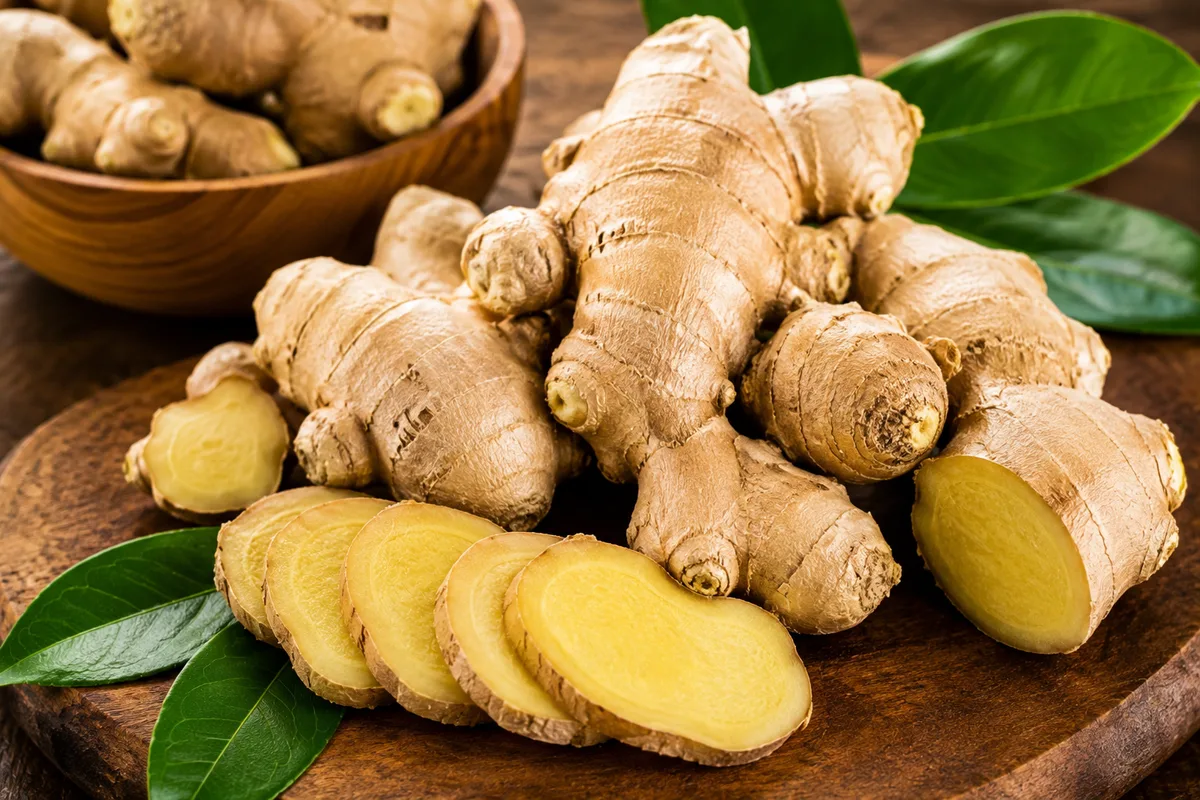
When you eat fresh or dried ginger, your body digests pungent phenolic compounds such as gingerols alongside small amounts of fiber, potassium, and micronutrients. Ginger is best studied for helping some people with nausea (including pregnancy-related nausea under clinician guidance) and for soothing digestive discomfort. It is not a cure for arthritis, infections, or chronic disease. Culinary amounts in US kitchens are generally well tolerated; high-dose supplements raise heartburn and interaction questions.
Key takeaways
The essentials in plain language—useful before the deep dive.
✓
Ginger benefits for everyday use center on flavor, mild digestive comfort, and researched support for some types of nausea—not miracle cures.
✓
Ginger nutrition is low-calorie; gingerols drive much of the pungent chemistry Americans taste in tea and cooking.
✓
Best-supported food use is digestive comfort and nausea support for some people—not disease cures.
✓
Fresh, tea, and powder are all valid kitchen forms with different intensity.
✓
About 1–2 grams culinary ginger (or a few thin slices in tea) is a practical daily range for many adults.
✓
High-dose supplements and continuous ginger shots can irritate the stomach and are not automatically better.
Quick answers
Short answers to common questions—details follow below.
What happens if you eat ginger every day?
Most people simply get a low-calorie spice with bioactive phenolics. Some notice less queasiness; others notice warmth or mild heartburn. Daily culinary use is common and usually fine for healthy US adults.
What are the main ginger benefits?
Realistic ginger benefits include culinary flavor with almost no calories, possible help with some types of nausea, and a role in flavorful home cooking. Ginger is not proven to cure arthritis, colds, or chronic disease by itself.
Is ginger good for nausea?
Evidence supports benefit for some people and some types of nausea, including some pregnancy-related nausea when a clinician approves food amounts. It is not guaranteed and not a substitute for emergency care when vomiting is severe.
Is ginger tea good for digestion and bloating?
Many people find ginger tea soothing. Evidence for bloating is mixed. Large raw doses can worsen heartburn. Start mild and see how you feel.
Fresh ginger or powder—which is better?
Both work for ginger nutrition and flavor. Fresh is brighter; powder is convenient and stable in the pantry. Match intensity to the recipe.
How much ginger per day is safe?
Culinary teaspoon-scale amounts (about 1–3 grams fresh, or a few tea slices) are typical for US home use. Higher supplemental doses need product labels and clinician input.
What happens over time
A typical timeline after eating Ginger—not a personal medical forecast. Individual responses vary.
●
0–20 minutes
Step 1 Evidence: Strong
First bites or sips
What happens: Pungent compounds stimulate warmth and saliva. Ginger tea delivers dilute phenolics with fluid; chewing fresh ginger is more intense.
Pattern certainty: typical
●
30 minutes–3 hours
Step 2 Evidence: Moderate
Digestion
What happens: Compounds are absorbed and metabolized. Some people feel less queasiness; others feel heartburn if doses are large or taken alone.
Pattern certainty: variable
Caution: Responses vary widely—especially in pregnancy or reflux.
●
Days to weeks
Step 3 Evidence: Moderate
Daily culinary pattern
What happens: Using ginger in cooking or tea can support flavorful, lower-sugar habits when it replaces ultra-processed snacks or sugary ginger ale.
Pattern certainty: variable
●
Months to years
Step 4 Evidence: Moderate
Longer-term pattern
What happens: Ginger remains a spice food. Long-term benefits track with overall diet quality; chronic disease prevention claims for ginger alone are overstated.
Pattern certainty: typical
●
0–20 minutes
Evidence: Strong
First bites or sips
What: Pungent compounds stimulate warmth and saliva. Ginger tea delivers dilute phenolics with fluid; chewing fresh ginger is more intense.
●
30 minutes–3 hours
Evidence: Moderate
Digestion
What: Compounds are absorbed and metabolized. Some people feel less queasiness; others feel heartburn if doses are large or taken alone.
Caution: Responses vary widely—especially in pregnancy or reflux.
●
Days to weeks
Evidence: Moderate
Daily culinary pattern
What: Using ginger in cooking or tea can support flavorful, lower-sugar habits when it replaces ultra-processed snacks or sugary ginger ale.
●
Months to years
Evidence: Moderate
Longer-term pattern
What: Ginger remains a spice food. Long-term benefits track with overall diet quality; chronic disease prevention claims for ginger alone are overstated.
Nutrient snapshot
Serving size: 1 tbsp grated fresh ginger (~6 g)
At a glance
Calories
5 kcal
Protein
0.1 g
Fat
0 g
Carbs
1.1 g
Fiber
0.1 g
Sugar
0.1 g
Vitamin highlights
Vitamin C ~0.3 mg
Minerals
Potassium ~25 mg
Magnesium ~3 mg
% Daily Value based on a general 2,000-calorie reference diet where shown. Values are approximate.
Source: USDA FoodData Central (approximate values for raw ginger root; scaled to ~1 tbsp grated)
Benefits
Potential upsides when this food fits a balanced pattern—not guaranteed outcomes for every person.
Nausea support for some people
Evidence: Moderate
Multiple trials suggest ginger can reduce nausea severity for some adults (including some pregnancy contexts when clinicians approve). It is not a universal anti-emetic drug.
Ginger ale, cookies, and candies often deliver more sugar than ginger benefit.
Who should limit this food
Educational context only—not a diagnosis tool. When in doubt, ask a qualified clinician.
!
Ginger allergy
Avoid and seek allergist care if reactions occur.
!
Upcoming surgery or anticoagulant therapy
Clarify high-dose ginger supplements with your care team.
!
Gallstone disease under specialist care
Follow clinician guidance on spicy foods and supplements.
!
Pregnancy (supplements)
Food amounts are often discussed as options for nausea, but dosing and product choice need obstetric guidance—do not self-prescribe high-dose pills.
How much & how often
For most healthy US adults, culinary use of about 1–3 grams of fresh ginger (roughly 1/2–1 tsp powdered, or a few thin slices in tea) per day is a common practical range. Clinical studies sometimes use standardized extracts—do not equate that with unlimited raw ginger. Stop if pain, burning, or rash occurs.
Ginger composition and gingerol chemistry are well described. Nausea-related clinical evidence is among the stronger applied findings; inflammation and metabolic claims are more preliminary. Food-first use is safer and more evidence-aligned for general wellness than megadosing.
Evidence in this article
Food composition
USDA nutrient data for raw ginger.
Clinical trials
Nausea and related symptom studies.
Safety monographs
NIH ODS and similar consumer health summaries.
Hierarchy of evidence
1
Systematic reviews & guidelines
Highest synthesis
2
Randomized trials
Strong causal designs
3
Observational studies
Association signals
4
Mechanistic / lab
Hypothesis-generating
Higher on this list generally means stronger confidence for public guidance—but every design has limits.
Research limitations
Product forms differ (fresh, dry, extract).
Nausea trials vary in dose and population.
Media claims often exceed evidence for chronic disease.
In depth
The short story
Ginger is a rhizome spice, not a miracle root. Americans use it in stir-fries, tea, smoothies, and “wellness shots.” The sharp flavor comes from gingerols and related compounds. Your body digests them like other plant foods. The best-supported everyday ginger benefits story is digestive comfort and nausea support for some people—not curing chronic disease with endless shots.
Ginger nutrition at a glance
Culinary ginger is very low calorie. A tablespoon of grated fresh root is only a few calories, so ginger nutrition facts matter more for bioactive compounds than for macros. That is why ginger fits easily into US weight-conscious and flavor-forward cooking—without acting like a multivitamin.
Fresh, tea, powder, and ginger ale
Form
Best use
Watch-out
Fresh grated
Cooking, tea
Strong raw bite
Hot tea
Mild nausea, hydration
Not a drug dose
Powder
Baking, rubs
Different intensity
Commercial ginger ale
Occasional drink
Often mostly sugar
Practical US kitchen tips
Slice thin for tea; simmer gently rather than boiling forever.
Prefer real ginger over sugar-heavy “ginger” sodas when health is the goal.
Bottom line
Eat ginger as a smart, low-calorie flavor tool. Use food amounts daily if you enjoy it; use clinical caution for high-dose supplements, pregnancy products, and bleeding-risk medications.
Frequently asked questions
What happens if you eat ginger every day?
+
Most people simply get a low-calorie spice with bioactive phenolics. Some notice less queasiness; others notice warmth or mild heartburn. Daily culinary use is common and usually fine for healthy US adults.
Realistic ginger benefits include culinary flavor with almost no calories, possible help with some types of nausea, and a role in flavorful home cooking. Ginger is not proven to cure arthritis, colds, or chronic disease by itself.
Evidence supports benefit for some people and some types of nausea, including some pregnancy-related nausea when a clinician approves food amounts. It is not guaranteed and not a substitute for emergency care when vomiting is severe.
Both work for ginger nutrition and flavor. Fresh is brighter; powder is convenient and stable in the pantry. Match intensity to the recipe.
How much ginger per day is safe?
+
Culinary teaspoon-scale amounts (about 1–3 grams fresh, or a few tea slices) are typical for US home use. Higher supplemental doses need product labels and clinician input.
Lab and early human data are interesting; food ginger is not proven anti-inflammatory medicine for arthritis. Use it as food, not as a drug substitute.

 Evidence: Strong
 Evidence: Strong
 Evidence: Strong
 Evidence: Strong
 Evidence: Strong
 Evidence: Strong