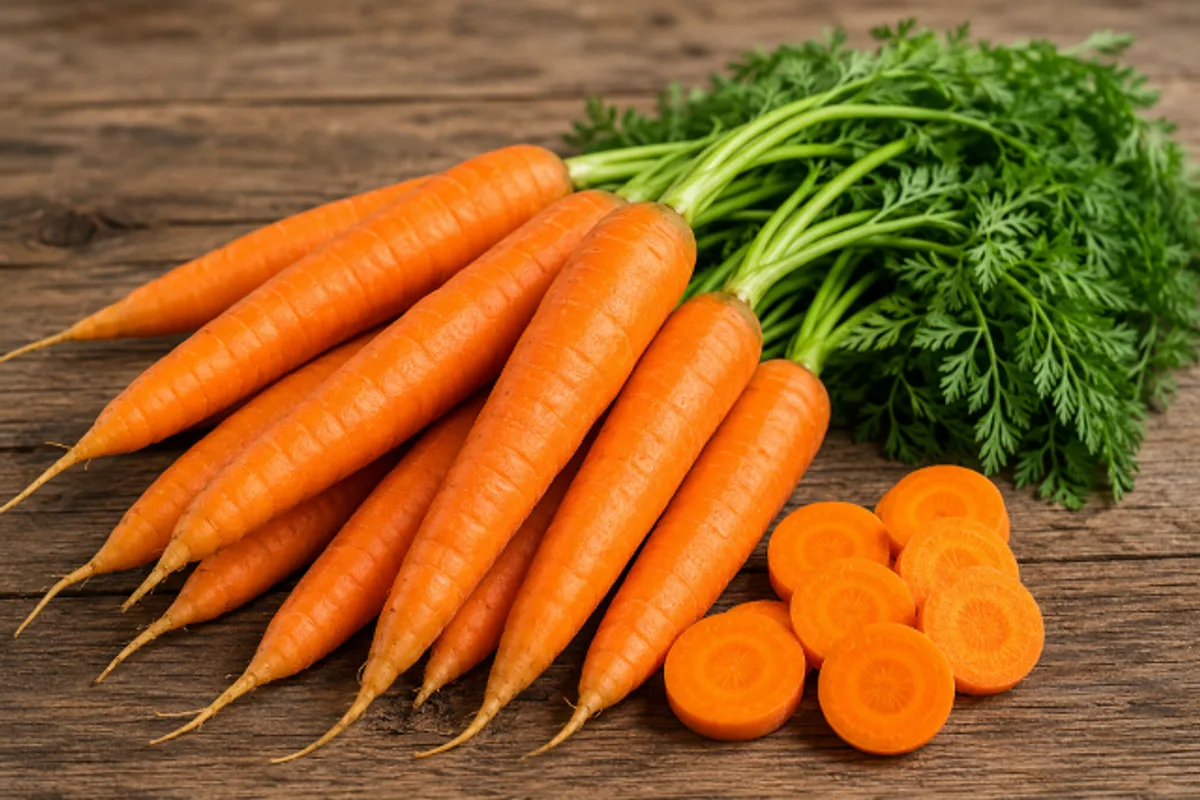
What happens in your body when you eat carrots every day—beta-carotene, vitamin A context, fiber, eye health myths, carotenemia, and raw vs cooked absorption.
When you eat carrots, your body digests natural sugars within a fiber-rich root matrix while beta-carotene converts to vitamin A as needed. Fat at the same meal improves carotenoid absorption. Daily carrots can support produce-rich eating patterns linked with better diet quality—not perfect eyesight or miracle cures—and whole carrots beat juice for fullness and typical blood sugar responses.
Key takeaways
The essentials in plain language—useful before the deep dive.
✓
Daily carrots supply beta-carotene, fiber, and potassium in a low-calorie package that supports vitamin A adequacy through food.
✓
Carrots help correct vitamin A-related vision problems when intake was low—they do not sharpen normal eyesight or fix refractive errors.
✓
Cooked carrots with a little fat often deliver more absorbable beta-carotene; raw carrots retain more vitamin C and work well for snacks.
✓
Whole carrots generally beat juice for fiber, fullness, and blood sugar response; very large juice habits raise carotenemia risk.
✓
Sustainable value comes from varied vegetables and overall diet quality—carrots are one useful piece, not a cure-all.
Quick answers
Short answers to common questions—details follow below.
What happens if you eat carrots every day?
For most people, daily carrots add beta-carotene, fiber, and potassium within normal digestion. Benefits come from consistent produce-rich patterns—not a single superfood effect.
How many carrots should you eat per day?
Many adults do well with one to two medium carrots daily as part of 2–3 cups of total vegetables from varied sources. Personal medical needs may change that target.
Can carrots improve your eyesight?
Carrots help maintain normal vision when vitamin A intake was low. They do not correct nearsightedness, farsightedness, or sharpen already-sufficient eyesight.
Why do carrots turn skin orange?
Very high beta-carotene intake over weeks can cause harmless carotenemia—a yellow-orange skin tint that fades when intake drops. Eye whites stay white, unlike jaundice.
Is it better to eat carrots raw or cooked?
Both fit. Cooked carrots with a little fat improve beta-carotene absorption; raw carrots retain more vitamin C and work well for quick snacks. Rotating both is ideal.
Is carrot juice as healthy as whole carrots?
No for everyday use. Juice lacks much fiber and is easier to overconsume. Prefer whole carrots most of the time.
What happens over time
A typical timeline after eating Carrot—not a personal medical forecast. Individual responses vary.
●
0–30 minutes
Step 1 Evidence: Strong
First bites
What happens: Chewing raw carrots starts starch digestion and saliva flow. Fiber in cell walls slows sugar absorption compared with carrot juice for many people.
Pattern certainty: typical
●
30 minutes–2 hours
Step 2 Evidence: Moderate
Absorption
What happens: Sugars and minerals absorb in the small intestine. Beta-carotene releases from the plant matrix; a little dietary fat at the meal may improve carotenoid uptake.
Pattern certainty: typical
Caution: Individual vitamin A conversion from carotenoids varies.
●
Several hours–24 hours
Step 3 Evidence: Strong
Gut transit
What happens: Insoluble fiber adds stool bulk; soluble fractions may ferment in the colon, producing short-chain fatty acids that nourish colon cells.
Pattern certainty: typical
●
1 week–1 month
Step 4 Evidence: Moderate
Weekly pattern
What happens: Regular carrots help many people meet vegetable and vitamin A goals. Benefits track with total diet quality—not one root vegetable alone.
Pattern certainty: variable
●
Months to years
Step 5 Evidence: Strong
Longer-term pattern
What happens: Produce-rich eating patterns are associated with favorable cardiometabolic markers in population research. Carrots are one dependable tool within that pattern.
Pattern certainty: typical
Caution: Association is not proof that carrots alone prevent disease.
●
0–30 minutes
Evidence: Strong
First bites
What: Chewing raw carrots starts starch digestion and saliva flow. Fiber in cell walls slows sugar absorption compared with carrot juice for many people.
●
30 minutes–2 hours
Evidence: Moderate
Absorption
What: Sugars and minerals absorb in the small intestine. Beta-carotene releases from the plant matrix; a little dietary fat at the meal may improve carotenoid uptake.
Caution: Individual vitamin A conversion from carotenoids varies.
●
Several hours–24 hours
Evidence: Strong
Gut transit
What: Insoluble fiber adds stool bulk; soluble fractions may ferment in the colon, producing short-chain fatty acids that nourish colon cells.
●
1 week–1 month
Evidence: Moderate
Weekly pattern
What: Regular carrots help many people meet vegetable and vitamin A goals. Benefits track with total diet quality—not one root vegetable alone.
●
Months to years
Evidence: Strong
Longer-term pattern
What: Produce-rich eating patterns are associated with favorable cardiometabolic markers in population research. Carrots are one dependable tool within that pattern.
Caution: Association is not proof that carrots alone prevent disease.
Nutrient snapshot
Serving size: 1 medium carrot (~61 g)
At a glance
Calories
25 kcal
Protein
0.6 g
Fat
0.2 g
Carbs
5.8 g
Fiber
1.7 g
Sugar
2.9 g
Vitamin highlights
Vitamin A (RAE) ~509 mcg 57% DV
Beta-Carotene ~5,050 mcg
Vitamin C ~3.6 mg 4% DV
Vitamin K1 ~8 mcg 7% DV
Vitamin B6 ~0.08 mg 5% DV
Minerals
Potassium ~195 mg 4% DV
Calcium ~20 mg 2% DV
Magnesium ~7 mg 2% DV
% Daily Value based on a general 2,000-calorie reference diet where shown. Values are approximate.
Source: USDA FoodData Central (approximate values for a medium raw carrot)
Benefits
Potential upsides when this food fits a balanced pattern—not guaranteed outcomes for every person.
Strong beta-carotene and vitamin A source
Evidence: Strong
One medium carrot supplies more than half the daily vitamin A recommendation for many adults through provitamin A carotenoids—supporting normal vision physiology when intake was adequate or low.
When carrots replace sugary snacks and ultra-processed sides, they support dietary patterns associated with cardiovascular health—low sodium, modest potassium, and antioxidant carotenoids.
Carrot allergy is uncommon but real. Birch-pollen-related oral allergy syndrome may cause mouth itching with raw carrots; cooking often helps tolerance.
Who should limit this food
Educational context only—not a diagnosis tool. When in doubt, ask a qualified clinician.
!
Carrot allergy
Avoid carrots in all forms and follow allergist guidance for testing and emergency planning.
Try cooked carrots or discuss alternatives with an allergist if raw carrots trigger mouth itching.
!
Diabetes or blood-sugar management
Whole carrots often fit better than juice. Use personal glucose data and clinician advice for portions.
!
Potassium-restricted renal diets
Follow individualized meal plans from your nephrology and dietitian team.
How much & how often
For most healthy adults, one to two medium carrots daily—or about one cup of chopped carrots as part of total vegetables—is a reasonable pattern. Dietary guidelines encourage about 2–3 cups of vegetables daily from varied sources. Increase fiber gradually if your diet is currently low. There is no universal perfect quota; medical needs, preparation, and total calories matter more than a fixed carrot count.
Carrot composition is well characterized in USDA databases for beta-carotene, fiber, and potassium. The strongest human evidence sits inside broader produce-and-fiber research and vitamin A adequacy—not claims that daily carrots cure disease or perfect eyesight in nourished adults. Whole carrots consistently outperform juice for fiber and satiety. Dietary fat at carrot-containing meals increases carotenoid absorption in controlled feeding studies.
Evidence in this article
Food composition data
USDA and similar databases quantify macros, fiber, carotenoids, and minerals per serving.
Controlled feeding studies
Human trials on dietary fat and carotenoid absorption from vegetable meals.
Observational cohorts
Population studies linking vegetable intake with cardiometabolic patterns.
Public health guidelines
NIH vitamin A and fiber fact sheets; WHO healthy diet guidance; AHA vegetable recommendations.
Hierarchy of evidence
1
Systematic reviews & guidelines
Highest synthesis
2
Randomized trials
Strong causal designs
3
Observational studies
Association signals
4
Mechanistic / lab
Hypothesis-generating
Higher on this list generally means stronger confidence for public guidance—but every design has limits.
Research limitations
Many cardiometabolic outcomes combine vegetables with broader diet changes, not carrots alone.
Eye-health headlines extrapolate WWII propaganda beyond vitamin A deficiency correction.
High-dose beta-carotene supplements harmed some smokers in trials—food sources at normal portions behave differently.
In depth
The short story
A carrot is mostly water and carbohydrate, with a standout dose of beta-carotene and meaningful fiber when you eat the whole root—not just the juice. Your body handles it through normal digestion: chew, absorb sugars and carotenoids, convert provitamin A as needed, and move fiber toward the colon.
Beta-carotene, vitamin A, and realistic expectations
Beta-carotene is a provitamin A carotenoid. Your body converts it to retinol when vitamin A is needed. That supports rhodopsin formation and surface eye health when intake was low. It is not the same as claiming carrots cure poor eyesight in people who already meet vitamin A needs. Nearsightedness and other refractive errors do not respond to extra carrots.
Fiber, fullness, and the food matrix
Whole carrots supply insoluble and soluble fiber—about 1.7 grams per medium root. That structure slows eating, adds crunch, and often produces steadier energy than sugary drinks or juice. Pairing carrot sticks with hummus, yogurt dip, or nuts at snacks is a practical way to add fat for carotenoid absorption and lengthen satisfaction.
Raw versus cooked
Raw carrots maximize vitamin C and snack convenience. Cooked carrots—especially roasted or steamed with olive oil—often deliver more usable beta-carotene because heat disrupts cell walls and fat aids uptake. Rotating both is smarter than picking one form forever.
Juice versus whole carrots
Carrot juice can deliver carotenoids quickly but removes most fiber and makes it easy to drink several carrots’ worth of sugar in minutes. For daily habits, whole carrots are the better default. Very large juice habits also raise carotenemia risk—the harmless orange skin tint from excess beta-carotene.
Carotenemia and when to pay attention
Yellow-orange palms or soles after heavy carrot or juice intake are usually carotenemia, which reverses when portions normalize. If the whites of the eyes yellow, that is different—talk with a clinician promptly.
Allergy and oral allergy syndrome
True carrot allergy is uncommon but documented. Some people with birch pollen sensitivity get mouth itching from raw carrots. Cooking often improves tolerance. Known allergy warrants avoidance and allergist guidance.
Long-term context
Population research links higher vegetable intake with better diet quality and favorable cardiometabolic patterns. Carrots are an affordable, kid-friendly way to move in that direction—especially when they replace chips or pastry snacks. Patterns matter more than any single root vegetable.
Practical tips
Aim for one to two medium carrots most days within varied vegetables—not carrots alone.
Pair cooked carrots with olive oil, avocado, or hummus for better beta-carotene absorption.
Prefer whole carrots over juice for everyday eating.
Increase fiber gradually if carrots are new to your diet; drink fluids to reduce bloating.
Wash well; peel if you prefer less surface residue—both are reasonable.
If raw carrots itch your mouth during pollen season, try cooked carrots or speak with an allergist.
Bottom line
Eating carrots every day can be a simple, evidence-aligned way to add beta-carotene, fiber, and potassium with few calories. Your body digests them like other whole vegetables. Benefits track with overall diet quality—not miracle claims—and whole carrots beat juice for most daily routines. Cooked carrots with a little fat and raw carrots for crunch both belong in a sustainable pattern.
Editor’s Note
Overall dietary patterns matter more than any single food. Carrots are best enjoyed as part of a balanced diet with leafy greens, proteins, whole grains, and other colorful plants—not as a standalone health strategy.
Frequently asked questions
What happens if you eat carrots every day?
+
For most people, daily carrots add beta-carotene, fiber, and potassium within normal digestion. Benefits come from consistent produce-rich patterns—not a single superfood effect.
How many carrots should you eat per day?
+
Many adults do well with one to two medium carrots daily as part of 2–3 cups of total vegetables from varied sources. Personal medical needs may change that target.
Can carrots improve your eyesight?
+
Carrots help maintain normal vision when vitamin A intake was low. They do not correct nearsightedness, farsightedness, or sharpen already-sufficient eyesight.
Very high beta-carotene intake over weeks can cause harmless carotenemia—a yellow-orange skin tint that fades when intake drops. Eye whites stay white, unlike jaundice.
Both fit. Cooked carrots with a little fat improve beta-carotene absorption; raw carrots retain more vitamin C and work well for quick snacks. Rotating both is ideal.
They may help when they replace higher-calorie snacks by adding volume and fiber with few calories. Total calories still govern weight change.
Can people with diabetes eat carrots?
+
Most can enjoy whole carrots in reasonable portions as part of balanced meals. Juice usually produces a sharper glucose rise. Follow clinician advice and personal monitoring.
Do carrots boost immunity?
+
They support normal immune function through vitamin A adequacy. They are not a shield against all infections and do not replace vaccines or medical care.

 Evidence: Strong
 Evidence: Strong
 Evidence: Strong
 Evidence: Strong
 Evidence: Moderate
 Evidence: Strong