What happens if you eat oatmeal every day—beta-glucan fiber, LDL cholesterol context, blood sugar, satiety, and why plain oats differ from sweetened instant packets.
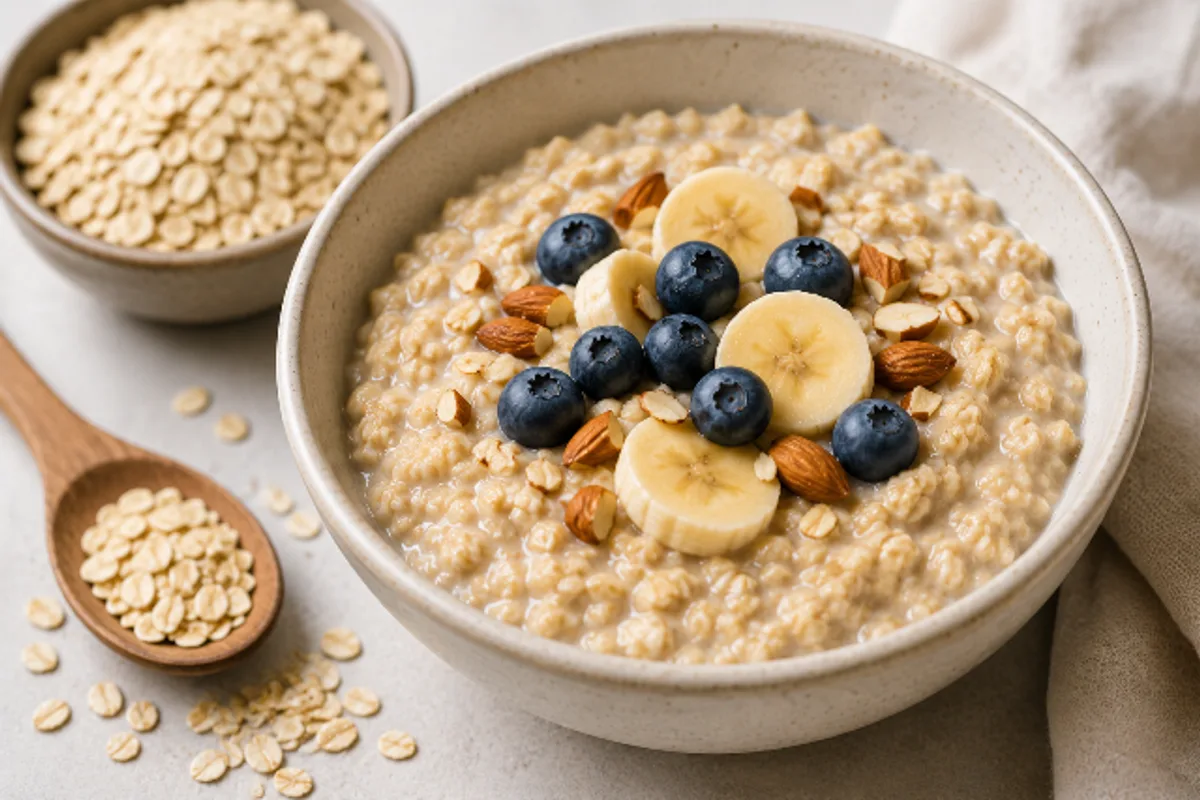
When you eat oatmeal, your body digests oat starch and soluble beta-glucan fiber, which may slow glucose absorption and support fullness compared with many refined breakfasts. Oats supply manganese, phosphorus, iron, and modest protein within a whole-grain pattern linked with heart health in research. Plain rolled or steel-cut oats differ sharply from sugar-heavy instant packets. Benefits track with overall diet quality—not instant cholesterol cures.
Key takeaways
The essentials in plain language—useful before the deep dive.
✓
Oat beta-glucan is a soluble fiber associated with modest LDL cholesterol lowering at about 3 g daily in many studies.
✓
Plain oats are relatively low in sugar; flavored instant packets often add significant added sugars.
✓
Pairing oats with protein, fruit, or nuts improves satiety and meal balance.
✓
Certified gluten-free oats are required for celiac disease because of cross-contamination risk.
Quick answers
Short answers to common questions—details follow below.
What happens if you eat oatmeal every day?
For most people, daily plain oatmeal adds beta-glucan fiber and whole-grain minerals within normal digestion. Benefits come from consistent patterns and preparation choices—not a single superfood effect.
Does oatmeal lower cholesterol?
Oat beta-glucan at about 3 g daily, within a diet low in saturated fat, may modestly lower LDL over weeks. It is not an instant or standalone fix.
Is instant oatmeal unhealthy?
Plain instant oats retain beta-glucan. The problem is often added sugar in flavored packets, not the oat flake itself.
Is oatmeal good for weight loss?
It may help when it replaces higher-calorie breakfasts and improves fullness, but total calories still govern weight change.
Is oatmeal gluten-free?
Oats are naturally gluten-free but frequently cross-contaminated. Celiac disease requires certified gluten-free oats.
Should you add protein to oatmeal?
Yes for many people—yogurt, milk, eggs, or nuts lengthen satiety and balance the meal beyond carbohydrates alone.
What happens over time
A typical timeline after eating Oatmeal—not a personal medical forecast. Individual responses vary.
●
0–30 minutes
Step 1 Evidence: Strong
First bites
What happens: Warm porridge enters the stomach; salivary and pancreatic enzymes begin starch breakdown while beta-glucan thickens the mixture, which may slow emptying for some people.
Pattern certainty: typical
●
30 minutes–2 hours
Step 2 Evidence: Moderate
Glucose absorption
What happens: Carbohydrates absorb gradually; beta-glucan viscosity can blunt post-meal glucose rises versus many refined cereals in studies.
Pattern certainty: variable
Caution: Sweetened instant packets behave differently from plain oats.
●
Several hours–24 hours
Step 3 Evidence: Strong
Gut transit
What happens: Oat fiber adds bulk; fermentable soluble fiber reaches the colon where microbes produce short-chain fatty acids.
Pattern certainty: typical
●
1 week–1 month
Step 4 Evidence: Moderate
Weekly pattern
What happens: Daily plain oats can raise fiber intake and replace sugary breakfasts. LDL changes, if they occur, usually require weeks of consistent beta-glucan intake within an overall sensible diet.
Pattern certainty: variable
●
Months to years
Step 5 Evidence: Strong
Longer-term pattern
What happens: Whole-grain habits are associated with favorable cardiometabolic patterns in population research. Oats are one practical vehicle—not a standalone treatment.
Pattern certainty: typical
Caution: Association is not proof that oats alone prevent disease.
●
0–30 minutes
Evidence: Strong
First bites
What: Warm porridge enters the stomach; salivary and pancreatic enzymes begin starch breakdown while beta-glucan thickens the mixture, which may slow emptying for some people.
●
30 minutes–2 hours
Evidence: Moderate
Glucose absorption
What: Carbohydrates absorb gradually; beta-glucan viscosity can blunt post-meal glucose rises versus many refined cereals in studies.
Caution: Sweetened instant packets behave differently from plain oats.
●
Several hours–24 hours
Evidence: Strong
Gut transit
What: Oat fiber adds bulk; fermentable soluble fiber reaches the colon where microbes produce short-chain fatty acids.
●
1 week–1 month
Evidence: Moderate
Weekly pattern
What: Daily plain oats can raise fiber intake and replace sugary breakfasts. LDL changes, if they occur, usually require weeks of consistent beta-glucan intake within an overall sensible diet.
●
Months to years
Evidence: Strong
Longer-term pattern
What: Whole-grain habits are associated with favorable cardiometabolic patterns in population research. Oats are one practical vehicle—not a standalone treatment.
Caution: Association is not proof that oats alone prevent disease.
Nutrient snapshot
Serving size: 1 cup cooked oatmeal (~234 g), plain
At a glance
Calories
166 kcal
Protein
5.9 g
Fat
3.6 g
Carbs
28 g
Fiber
4 g
Sugar
0.6 g
Vitamin highlights
Vitamin B1 (Thiamine) ~0.17 mg 14% DV
Folate ~14 mcg 4% DV
Minerals
Manganese ~1.4 mg 61% DV
Phosphorus ~180 mg 14% DV
Magnesium ~63 mg 15% DV
Iron ~2.1 mg 12% DV
Zinc ~1.1 mg 10% DV
Potassium ~164 mg 3% DV
% Daily Value based on a general 2,000-calorie reference diet where shown. Values are approximate.
Source: USDA FoodData Central (approximate values for plain cooked oatmeal)
Benefits
Potential upsides when this food fits a balanced pattern—not guaranteed outcomes for every person.
Beta-glucan and LDL cholesterol
Evidence: Strong
Oat beta-glucan at about 3 g per day, as part of a diet low in saturated fat, is associated with modest LDL cholesterol lowering in meta-analyses.
Jumping from very low fiber to large daily portions may cause gas or bloating without gradual adjustment and adequate fluids.
Gluten cross-contamination
Oats are naturally gluten-free but are often processed with wheat. People with celiac disease need certified gluten-free oats.
Calorie-dense toppings
Heavy brown sugar, syrup, or nut-butter portions can turn a modest bowl into a high-calorie meal despite health halos.
Who should limit this food
Educational context only—not a diagnosis tool. When in doubt, ask a qualified clinician.
!
Celiac disease
Use certified gluten-free oats only; confirm tolerance with your gastroenterology and dietitian team.
!
Rare oat allergy
Avoid oats and seek allergist care if you develop consistent oral or systemic allergy symptoms.
!
Diabetes or blood-sugar management
Plain oats can fit many plans, but portions, toppings, and personal glucose curves matter. Monitor and follow clinician advice.
!
Carbohydrate-restricted medical diets
Follow prescribed medical nutrition therapy rather than general articles.
How much & how often
For most healthy adults, about 1 cup of cooked plain oatmeal is a reasonable single serving. Beta-glucan research often uses roughly 3 g daily for LDL effects, achievable through a hearty plain oat serving plus other oat foods in the day. Increase fiber gradually if your diet is currently low. There is no universal perfect quota; total calories, toppings, and medical needs matter more than any single bowl count.
The strongest oatmeal evidence centers on beta-glucan soluble fiber. Food composition is well characterized, controlled trials and meta-analyses support modest LDL lowering at adequate daily doses, and post-meal glucose responses often favor viscous oats over refined cereals. Claims that one bowl instantly fixes cholesterol or weight are not supported. Product type matters; plain oats differ sharply from dessert-style instant packets.
Evidence in this article
Randomized controlled trials
Oat beta-glucan interventions measuring LDL cholesterol and post-meal glucose.
Meta-analyses
Pooled analyses of soluble fiber effects on blood lipids.
Regulatory reviews
FDA health claim context for beta-glucan from whole oats and coronary heart disease risk.
Observational cohorts
Whole-grain intake linked with type 2 diabetes and cardiovascular patterns; association, not isolated oat proof.
Hierarchy of evidence
1
Systematic reviews & guidelines
Highest synthesis
2
Randomized trials
Strong causal designs
3
Observational studies
Association signals
4
Mechanistic / lab
Hypothesis-generating
Higher on this list generally means stronger confidence for public guidance—but every design has limits.
Research limitations
Many cardiometabolic outcomes combine oats with broader diet changes, not oatmeal alone.
Instant flavored products add sugars that weaken whole-grain advantages.
Individual glycemic responses vary, especially with diabetes.
In depth
The short story
Oatmeal is cooked oat grain—mostly starch and soluble beta-glucan fiber suspended in water. Your body does not treat it like a candy bar or a medicine. It treats it like food: chew (or sip), digest, absorb glucose, and ferment fiber in the colon.
Beta-glucan, cholesterol, and realistic expectations
Beta-glucan forms a viscous gel in the gut. At about 3 grams per day, as part of a diet low in saturated fat, it is associated with modest LDL cholesterol lowering in research—not overnight transformation. One plain bowl contributes toward that goal; totals across the day matter.
Blood sugar and morning energy
Compared with many refined cereals and pastries, plain oats often produce a more moderate post-meal glucose rise for many people because of fiber viscosity and meal volume. Flavored instant packets with heavy added sugar behave more like dessert and weaken that advantage.
Plain oats vs instant dessert packets
Read labels. Plain rolled, steel-cut, or unsweetened instant oats are in a different category from maple-brown-sugar packets with double-digit added sugars. The oat is not the problem; the sugar coating often is.
Gluten and allergies
Oats are naturally gluten-free but commonly cross-contaminated in facilities that process wheat. Celiac disease requires certified gluten-free oats. True oat allergy is rare but warrants medical evaluation when symptoms are consistent.
Build a better bowl
Start with plain oats; sweeten with fruit if needed.
Increase portion size gradually if fiber is new to you.
Choose steel-cut or rolled oats for everyday use; save sweet instant packets for occasional convenience.
Bottom line
Eating oatmeal every day can be a practical whole-grain habit that adds beta-glucan fiber, minerals, and steady breakfast structure. Your body digests it through normal starch and fiber pathways. Long-term value depends on plain preparation, sensible toppings, and how oats fit the rest of your diet—not miracle claims.
Frequently asked questions
What happens if you eat oatmeal every day?
+
For most people, daily plain oatmeal adds beta-glucan fiber and whole-grain minerals within normal digestion. Benefits come from consistent patterns and preparation choices—not a single superfood effect.
Does oatmeal lower cholesterol?
+
Oat beta-glucan at about 3 g daily, within a diet low in saturated fat, may modestly lower LDL over weeks. It is not an instant or standalone fix.

 Evidence: Strong
 Evidence: Moderate
 Evidence: Strong
 Evidence: Strong
 Evidence: Strong
 Evidence: Moderate