Introduction
Broccoli is one of the most commonly eaten vegetables in the U.S., and for good reason. It is packed with vitamins, fiber, antioxidants, and unique plant compounds that support your body in many ways. If you are wondering what happens if you eat broccoli every day, the answer is encouraging — it may support your health and even your appearance. Still, like any food, it is not perfect for everyone.
Quick List of 10 Benefits of Eating Broccoli Every Day
- Supports heart health
- Helps digestion and gut health
- Boosts immune system
- Supports blood sugar control
- Strengthens bones and joints
- Helps reduce inflammation
- Supports healthy weight management
- Improves skin glow and anti-aging
- Supports healthy hair growth
- May support hormonal balance and detox support
1. Quick Answer: What Happens If You Eat Broccoli Every Day?
Eating broccoli daily may support heart health, digestion, immunity, blood sugar balance, and even beauty benefits like skin and hair health thanks to fiber, Vitamin C, Vitamin K, and strong antioxidants such as sulforaphane. However, some people may experience gas, bloating, or thyroid concerns if they consume very large amounts regularly.
2. Nutrition Facts (Per 1 Cup Cooked Broccoli – U.S. Serving)
- Around 55 calories
- 11 g carbohydrates
- 0.5 g fat
- 4 g protein
- 5 g fiber
- High in Vitamin C
- High in Vitamin K
- Contains folate
- Source of potassium
- Contains sulforaphane and antioxidants
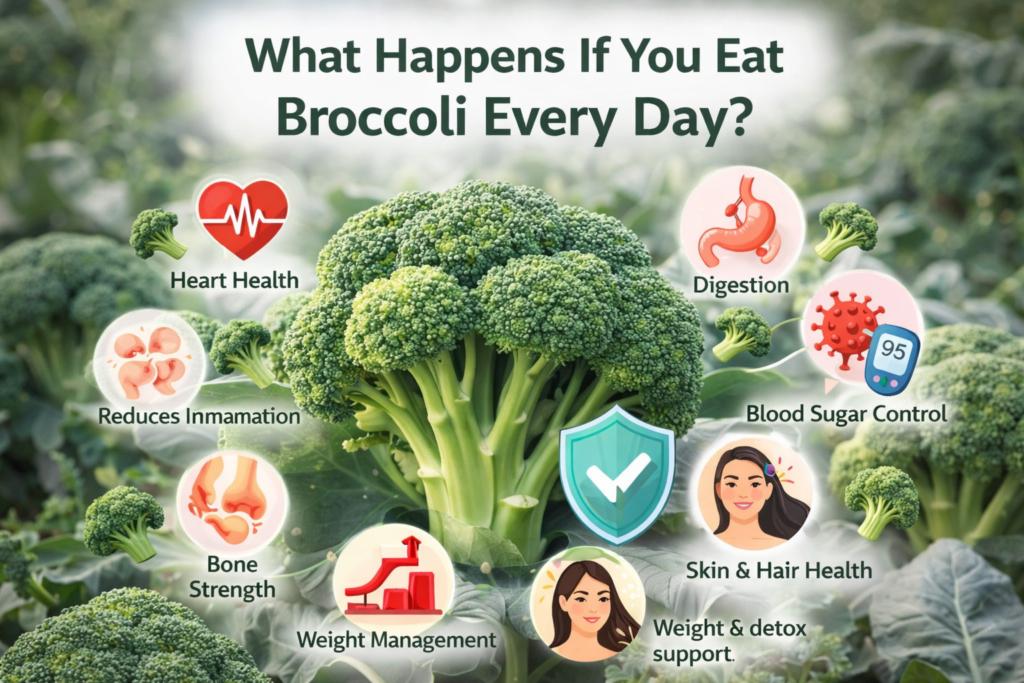
3. 10 Proven Health & Beauty Benefits of Eating Broccoli Daily
3.1 Supports Heart Health
Broccoli contains fiber, potassium, and antioxidants that may help maintain healthy cholesterol and blood pressure levels, supporting long-term heart health.
3.2 Improves Digestion
The fiber in broccoli supports smoother bowel movements and a healthier gut microbiome, helping reduce constipation and improving digestive comfort.
3.3 Boosts Immunity
Broccoli is rich in Vitamin C, which plays a key role in immune function and helps your body respond better to infections and daily stress.
3.4 Supports Blood Sugar Control
Broccoli is low in calories and high in fiber, which may help stabilize blood sugar levels by slowing digestion and preventing sharp glucose spikes.
3.5 Strengthens Bones & Joints
Packed with Vitamin K, calcium, and minerals, broccoli supports strong bones and may contribute to better joint health.
3.6 Helps Reduce Inflammation
Broccoli contains sulforaphane, a powerful antioxidant studied for its anti-inflammatory benefits. This may help protect cells from oxidative stress.
3.7 Supports Weight Management
Low-calorie yet filling, broccoli helps control appetite, supports metabolism, and fits well into weight-loss or weight-maintenance diets.
3.8 Beauty Benefit: Healthier, Glowing Skin
Vitamin C helps support collagen production, while antioxidants protect skin from damage and oxidative stress. Regular broccoli intake may support firmer, brighter, healthier-looking skin.
3.9 Beauty Benefit: Supports Hair Strength
Broccoli provides vitamins A, C, and B-complex nutrients that may nourish hair follicles, support scalp health, and help maintain stronger, shinier hair.
3.10 May Support Hormonal Balance & Detox Support
Broccoli contains compounds that may support the body’s natural detox processes, which can play a role in hormonal balance and overall wellness.
4. Possible Side Effects & Risks
Broccoli is generally safe, but some people may experience:
- Gas and bloating
- Digestive discomfort
- Possible thyroid concern if eaten in extremely large raw amounts
- Rare allergic reaction
- Interference with iodine absorption if consumed excessively
5. Is It Safe to Eat Broccoli Every Day?
For most healthy adults, yes, broccoli is safe to eat daily as part of a balanced diet. However, people with thyroid issues, IBS, allergies, or special medical conditions should talk to a healthcare professional for guidance.
6. How Much Broccoli Should You Eat Per Day?
A healthy daily intake is:
- About 1 cup cooked broccoli
or - 1–1½ cups raw broccoli
This supports health benefits without overconsumption.
7. Best Time to Eat Broccoli
You can eat broccoli anytime:
If you experience gas, eat broccoli along with meals instead of on an empty stomach.
8. Who Should Avoid or Limit Broccoli?
Use caution if you have:
- Thyroid disorders
- IBS or digestive sensitivity
- Broccoli allergy
- Blood thinner use (due to Vitamin K)
- Any medical condition requiring dietary guidance
9. Healthy Ways to Add Broccoli to Your Diet
- Steamed broccoli as a side
- Stir-fried with chicken or tofu
- Added to salads
- Roasted with olive oil
- Blended into soups
- Mixed into pasta
- Meal prep bowls
Frequently Asked Questions
Can i eat broccoli at night?
Yes, but large amounts may cause gas for some people.
Is broccoli good for weight loss?
Yes. It is filling, low-calorie, and fiber-rich.
Can I eat broccoli every day?
Yes, in normal amounts it is generally safe and beneficial.
Can broccoli improve skin and hair?
Yes, its antioxidants and vitamins may support skin glow and healthier hair.
Can kids eat broccoli daily?
Yes, in normal portions broccoli is healthy for children.
Disclaimer
The information in this article does not replace professional medical consultation, diagnosis, or treatment. Do not ignore professional advice or delay seeking it because of something you read here. Always speak with your healthcare provider before changing your diet.
Also Read
Conclusion
Eating broccoli every day offers impressive health and beauty benefits—from better digestion, heart health, immunity, and weight control to glowing skin and healthier hair. However, it may cause bloating and may not be ideal in large amounts for individuals with thyroid or digestive issues. For most people, 1 cup of cooked broccoli daily is a safe, beneficial addition to a balanced diet.