
Key Takeaways
- Eating oatmeal daily may support smoother digestion, steadier energy, and long-lasting fullness due to its soluble fiber content.
- Oatmeal provides nutrients that help regulate blood sugar and support heart and metabolic health over time.
- Many people notice improved gut comfort, fewer cravings, and more stable energy within the first one to two weeks of consistent intake.
Introduction
It doesn’t look impressive. It’s plain, warm, and simple. No bright colors. No crunch. No excitement. Yet it has remained a daily breakfast choice for millions of people across cultures and generations.
You’ve probably eaten oatmeal before—maybe when you were sick, trying to “eat clean,” or following advice about heart health. But most people never stop to notice what actually happens inside the body when it becomes a daily habit, not just an occasional meal.
I started eating oatmeal every morning out of convenience. It was quick. Affordable. Filling. What surprised me wasn’t a dramatic transformation—it was the calmness. No energy crash. No sudden hunger. Digestion felt steady. Predictable. Almost quiet.
So, what happens if you eat oatmeal every day?
The answer isn’t instant change. It’s a collection of slow, meaningful shifts that build gradually—especially in digestion, energy regulation, and overall internal balance. And that’s exactly where oatmeal shines.
Here Are the 7 Major Things Your Body Experiences
When oatmeal becomes part of your daily routine, many people gradually notice these changes:
- Smoother digestion and improved gut comfort
- Longer-lasting fullness and fewer cravings
- More stable energy throughout the day
- Improved blood sugar balance
- Support for heart and metabolic health
- Reduced low-grade inflammation over time
- A calmer, more balanced daily rhythm
Each effect may feel subtle on its own. Together, they create a noticeable difference in how the body feels from morning to night.
Quick Summary
Eating oatmeal every day may help support digestion, steady energy, and blood sugar balance. Over time, its unique fiber content contributes to gut health, heart support, and lasting fullness.
Nutritional Breakdown: Why Oatmeal Works
Oatmeal’s strength lies in its simplicity. It doesn’t rely on extreme nutrients or quick sugars. Instead, it delivers slow, sustained nourishment that the body can easily manage.
When oatmeal cooks, it forms a soft, creamy texture. That texture isn’t just comforting—it’s functional. Oats contain a special type of soluble fiber that absorbs water and forms a gel-like consistency in the digestive tract. This slows digestion and allows nutrients to be released gradually.
Oats are naturally low in sugar, moderate in protein, and rich in complex carbohydrates. This balance explains why oatmeal feels filling without feeling heavy.
At the center of oatmeal’s benefits is beta-glucan, a soluble fiber that plays a key role in digestion, cholesterol regulation, and blood sugar control.
Key Nutrients Found in Oatmeal
Beta-glucan fiber
Supports digestion, promotes fullness, and helps regulate blood sugar levels.
Complex carbohydrates
Provide slow, steady energy instead of rapid spikes.
Magnesium
Supports muscle relaxation, nerve signaling, and energy production.
Iron
Helps transport oxygen through the blood, supporting stamina and mental clarity.
B vitamins
Assist in converting food into usable energy, supporting metabolic efficiency.
How Oatmeal Affects Digestion
It doesn’t stimulate digestion aggressively. Instead, it stabilizes it.
The gel-forming fiber slows the movement of food through the gut, allowing digestive enzymes more time to work effectively. This often results in:
- Less bloating
- More regular bowel movements
- Reduced digestive irritation
People with sensitive stomachs often tolerate oatmeal better than raw fruits or refined cereals. Its soft texture and water-absorbing properties make it gentle on the digestive lining.
Another overlooked benefit is how oatmeal supports the gut microbiome. Beta-glucan acts as a prebiotic, feeding beneficial gut bacteria. Over time, this may improve overall gut balance, influencing digestion, immunity, and even mood.
Why Oatmeal Keeps You Full Longer
If you’ve ever noticed that oatmeal “sticks with you,” there’s a biological reason.
Satiety is influenced by:
- Fiber
- Protein
- Volume
- Digestion speed
Oatmeal checks all four.
The fiber expands in the stomach, increasing volume. Protein slows digestion further. The warm, thick texture triggers satiety signals more effectively than dry or processed foods. Together, this reduces the urge to snack between meals.
This is why oatmeal is often associated with improved appetite control throughout the day.
Energy Stability: No Spikes, No Crashes
Many breakfasts provide quick energy but leave you tired an hour later. Oatmeal works differently.
The carbohydrates in oats are complex, meaning they break down slowly. Combined with fiber, this leads to:
- Gradual glucose release
- Stable insulin response
- Longer-lasting energy
People who eat oatmeal regularly often describe their energy as “even” or “calm,” rather than sharp or jittery. This makes it especially useful for long workdays, school mornings, or physically demanding routines.
Heart and Metabolic Support
Beta-glucan has been widely studied for its role in heart health. It binds to bile acids in the gut, helping the body remove excess cholesterol more efficiently.
Research cited by Harvard Health indicates that regular oat consumption may support healthy cholesterol levels as part of a balanced diet.
This effect is cumulative. Daily intake matters more than occasional servings.
It may also support metabolic health by:
- Improving insulin sensitivity
- Reducing post-meal blood sugar fluctuations
- Supporting long-term weight regulation
The Quiet Benefit Most People Miss
This encourages routine.
Eating it daily creates predictability for the body. Digestion happens at similar times. Hunger cues stabilize. Energy follows a pattern. This consistency alone can improve how the body feels—even before deeper nutritional changes occur.
That’s why this meal often becomes a long-term habit rather than a short-lived health phase.
Beauty and Appearance Effects
This isn’t usually associated with beauty, yet many people notice subtle improvements in their skin after eating it consistently.
These changes aren’t dramatic. They’re gradual. And they’re driven by internal balance.
Calmer, More Balanced Skin
It contains antioxidants called avenanthramides, which help reduce oxidative stress. Lower internal stress often translates to skin that looks less reactive, less dull, and more even.
This is why oatmeal is commonly used in topical skincare—and eating it supports similar processes internally.
Improved Skin Texture
Better digestion and nutrient absorption allow the body to deliver nutrients to the skin more efficiently. Over time, this may result in smoother texture, reduced dryness, and better moisture retention.
Hydration Support
While oatmeal isn’t water-rich, its soluble fiber helps the body retain fluids more effectively. This supports skin elasticity and comfort, especially during dry or cold seasons.
Inflammation and Stress Response
Low-grade inflammation doesn’t always present as pain. It often shows up as fatigue, digestive discomfort, skin sensitivity, or energy fluctuations.
It supports the body’s ability to manage this background stress. Its fiber, antioxidants, and slow-digesting carbohydrates reduce sharp physiological stress responses, creating a calmer internal environment.
Why Results Vary
Some people notice benefits quickly. Others need time.
Results depend on:
- Overall diet quality
- Hydration
- Stress levels
- Portion size
- Preparation method
This works best when eaten consistently and prepared simply, without excessive sugar or heavy toppings.
Transformation Timeline
Day 1–2
Longer-lasting fullness, calmer digestion, reduced snacking urges.
Week 1
More stable energy, fewer crashes, improved bowel regularity.
Week 2–3
Reduced bloating, improved gut comfort, greater internal balance.
Month 1 and beyond
Consistent appetite control, predictable digestion, steady energy, and a more structured daily rhythm.
Risks and Considerations
Oatmeal is generally safe, but awareness matters.
- Increasing fiber too quickly may cause temporary bloating
- Very large portions with sugary toppings add excess calories
- People with gluten sensitivity should choose certified gluten-free oats
- Pairing with protein or healthy fats can improve blood sugar balance
How to Eat Oatmeal Daily
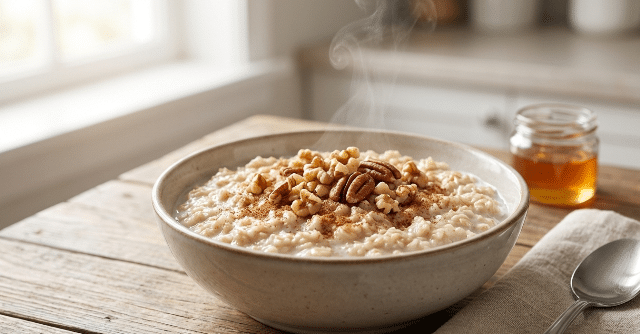
- Simple bowl: Oats with water or milk, cinnamon, and fruit
- Protein-balanced: Add yogurt, nuts, or seeds
- Savory option: Cook with broth and add eggs or vegetables
Variety helps consistency.
The Big Picture
This doesn’t transform the body overnight. What it offers is reliability.
When eaten daily, it supports digestion, energy stability, appetite control, and internal balance in a way that feels natural and sustainable. And that’s why oatmeal remains a daily staple for so many people.
Disclaimer
This content is for informational purposes only and is not intended as medical advice. Individual responses to foods may vary. Always consult a qualified healthcare professional before making dietary or lifestyle changes, especially if you have any medical conditions.
Also Read:
FAQ Section
Is it okay to eat oatmeal every day?
Yes, for most people, eating this every day is generally safe and beneficial. It provides soluble fiber, complex carbohydrates, and minerals that support digestion, steady energy, and overall balance when eaten in moderate portions.
What happens if you eat oatmeal every day?
Eating oatmeal daily may help improve digestion, support stable energy levels, and reduce frequent hunger. Over time, many people notice better gut comfort and more consistent energy throughout the day.
Does oatmeal help with digestion and gut health?
Oatmeal contains beta-glucan, a soluble fiber that supports smoother digestion and feeds beneficial gut bacteria. This may help reduce bloating and promote regular bowel movements over time.
Can oatmeal help with weight control?
Oatmeal can support appetite control because it keeps you full longer. While it is not a weight-loss food on its own, it may help reduce overeating when included as part of a balanced diet.
Is oatmeal good for skin health?
Oatmeal supports digestion and hydration, which can indirectly benefit skin health. Some people notice calmer, more balanced skin with consistent oatmeal intake.
Is oatmeal suitable for people with gluten sensitivity?
Oats are naturally gluten-free, but cross-contamination can occur during processing. People with gluten sensitivity should choose certified gluten-free oats to avoid reactions.